Mostar from Dubrovnik
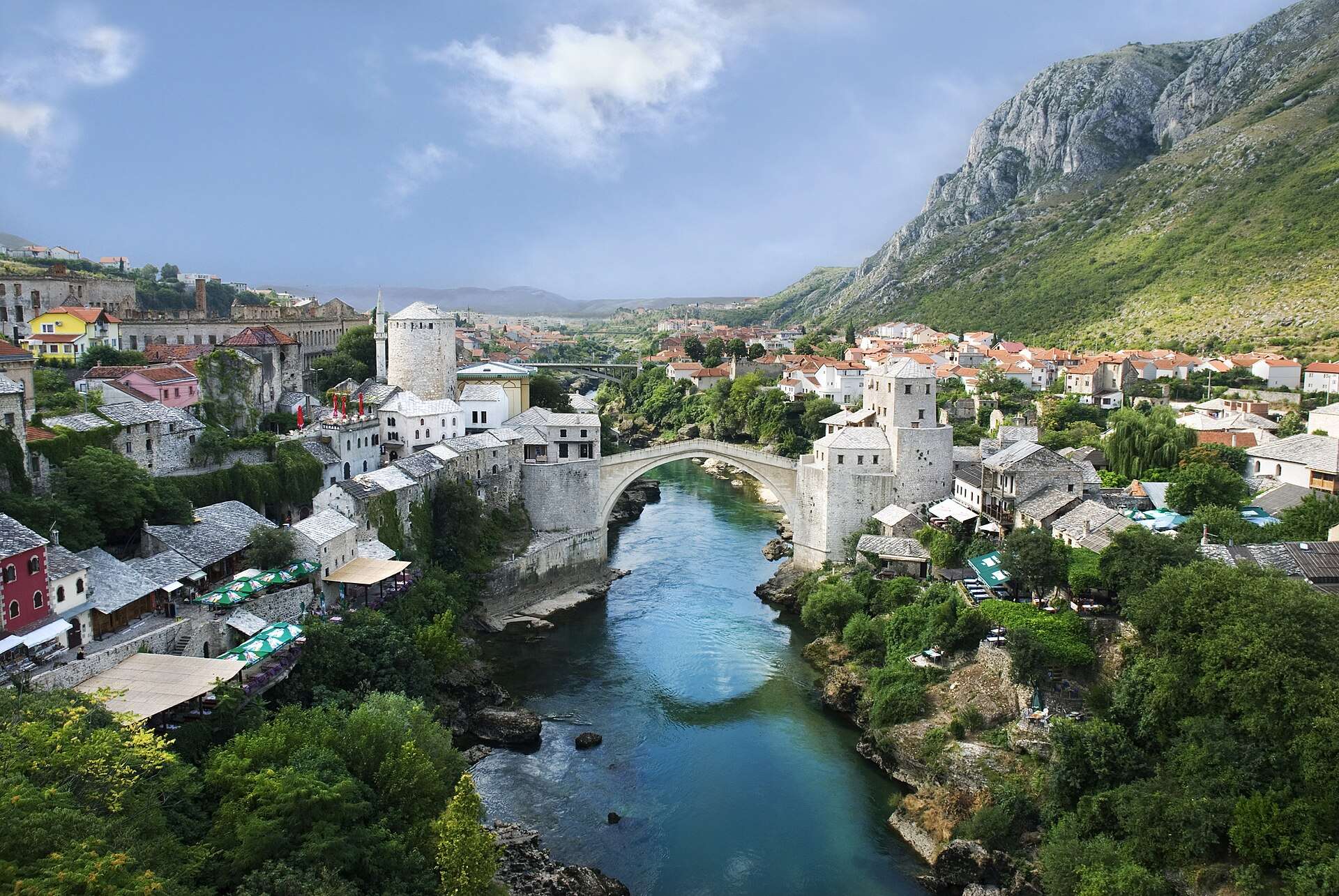
Three hours and a border away, the bridge that stood four centuries, fell to shellfire in 1993, and rose again in its own stone arcs over the Neretva. The divers still jump — after they’ve collected — and the town wears its history without apology.
The short version
- The route runs the coastal road and the Neretva valley through the Metković crossing — about 2.5–3 hours of driving before border time, which ranges from minutes to serious summer queues; rental cars need their Bosnia paperwork (green card) confirmed before the trip.
- Bosnia and Herzegovina uses the convertible mark (BAM); euros circulate at rough rates in the tourist quarter, per the alarm’s small-notes rule, and cards work in established places — expect change quirks and carry accordingly.
- The Stari Most stood from 1566 — Ottoman engineering’s single-arc showpiece — until November 1993, when it was destroyed by tank shellfire in the war; rebuilt with original techniques and salvaged-quarry stone, it reopened in 2004 and carries UNESCO status with its old town.
- The Mostar diving club keeps the bridge-jumping tradition — 24 meters into the cold Neretva — and runs it as plain commerce: the divers collect from the crowd first, then jump, and the alarm already endorsed the arrangement.
- The Kujundžiluk bazaar’s coppersmiths and lanes fill the bridge’s approaches; the Koski Mehmed Pasha mosque’s minaret sells the classic bridge panorama for a modest ticket and a tight spiral climb.
- The war’s marks remain on buildings beyond the rebuilt core — shell scars and ruins the town doesn’t hide; the visit takes them as history in place, read with the same straight face the town shows them.

Getting there
Car or tour are the working answers — scheduled buses exist but their timetables plus two border passages make the day-return a gamble, the Kotor lesson repeated northbound. Drivers leave Dubrovnik by eight, carry passports and the rental’s Bosnia authorization, and treat Metković’s queue as weather: unpredictable, occasionally severe, always survivable with an early start. Tours bundle the border craft and add commentary through the Neretva’s war-and-wine valley. Either way, Mostar’s old town is pedestrian; parking rings it at negotiable rates.
The visit
Approach the bridge the way the town builds it: through Kujundžiluk’s copper lanes, the arc appearing between buildings before the full reveal at the banks. Walk it slowly — the polished limestone is genuinely slick, which the embedded cross-ribs acknowledge — and take the downstream gravel beach for the postcard angle. The divers’ cycle runs on crowd arithmetic: collection, ceremony at the rail, the drop, and the Neretva’s cold applause; contribute or don’t, but the alarm settled the ethics. The Koski Mehmed minaret repays its climb with the one view that holds bridge, river, and minarets together. Lunch runs Bosnian and cheap — ćevapi, burek, Herzegovina wine — on terraces over the water. The museum in the bridge tower tells the fall-and-rebuild with footage that stills the room; the war-scarred blocks beyond the core extend the same history at street scale, walked respectfully. Blagaj’s dervish house under its cliff spring sits twenty minutes on for those with margin; the border’s evening mood sets the departure time regardless.
When to go
April–June and September–October give the stone town its walking temperatures and the border its patience. July–August bakes the Herzegovina bowl past 35°C and stacks the crossings — dawn starts and midday shade become the method, and the divers’ schedule thickens with the crowds. Winter runs quiet, cold, and occasionally snow-dusted, with the bridge nearly private and some terraces shuttered; the crossing rarely queues. The alarm’s border-first budgeting is the constant across all of it.
Frequently Asked Questions
Is the day trip too rushed to be worth it?
It’s a long day honestly framed: six hours of driving-plus-border buys four or five in a town that concentrates its essentials tightly. Worth it, yes — and the overnight version, with the bridge floodlit and the day-trippers gone, is the acknowledged upgrade for anyone with a spare night.
How should I handle the war history?
As the town does — visible, factual, and part of the place. The museum and the scarred buildings tell it without your commentary needed; photograph architecture rather than residents, skip the shell-casing souvenirs if provenance troubles you, and let the rebuilt bridge make its own argument about endings.
Do the divers jump for free if I don’t pay?
They jump when the collection meets the club’s threshold — that’s the arrangement, generations old, and it funds the tradition and its training. Watching costs nothing; the hat coming around is the show’s honest box office.
Can I swim in the Neretva?
The gravel beach below the bridge sees summer swimmers in water that stays snowmelt-cold year-round; currents run stronger than the green calm suggests. Locals’ spots and locals’ judgment govern — this is a river, not a pool.
Mostar or Kotor as the Dubrovnik border day?
Kotor (documented on this network) for bay scenery and the walls climb; Mostar for Ottoman heritage and the bridge’s history at full weight. Different countries, same border arithmetic — the early start rules both, and doing each on its own day beats any combination.