Cavtat from Dubrovnik
Thirty minutes by boat or bus to a palm-lined waterfront, a sculptor’s hilltop mausoleum, and dinner at half the old town’s prices.
The short version
- Bus 10 runs from Dubrovnik about every half hour, 25–35 minutes, a few euros each way — routes at libertasdubrovnik.hr. In season, boats from the Old Port do the same trip on the water for about €8.
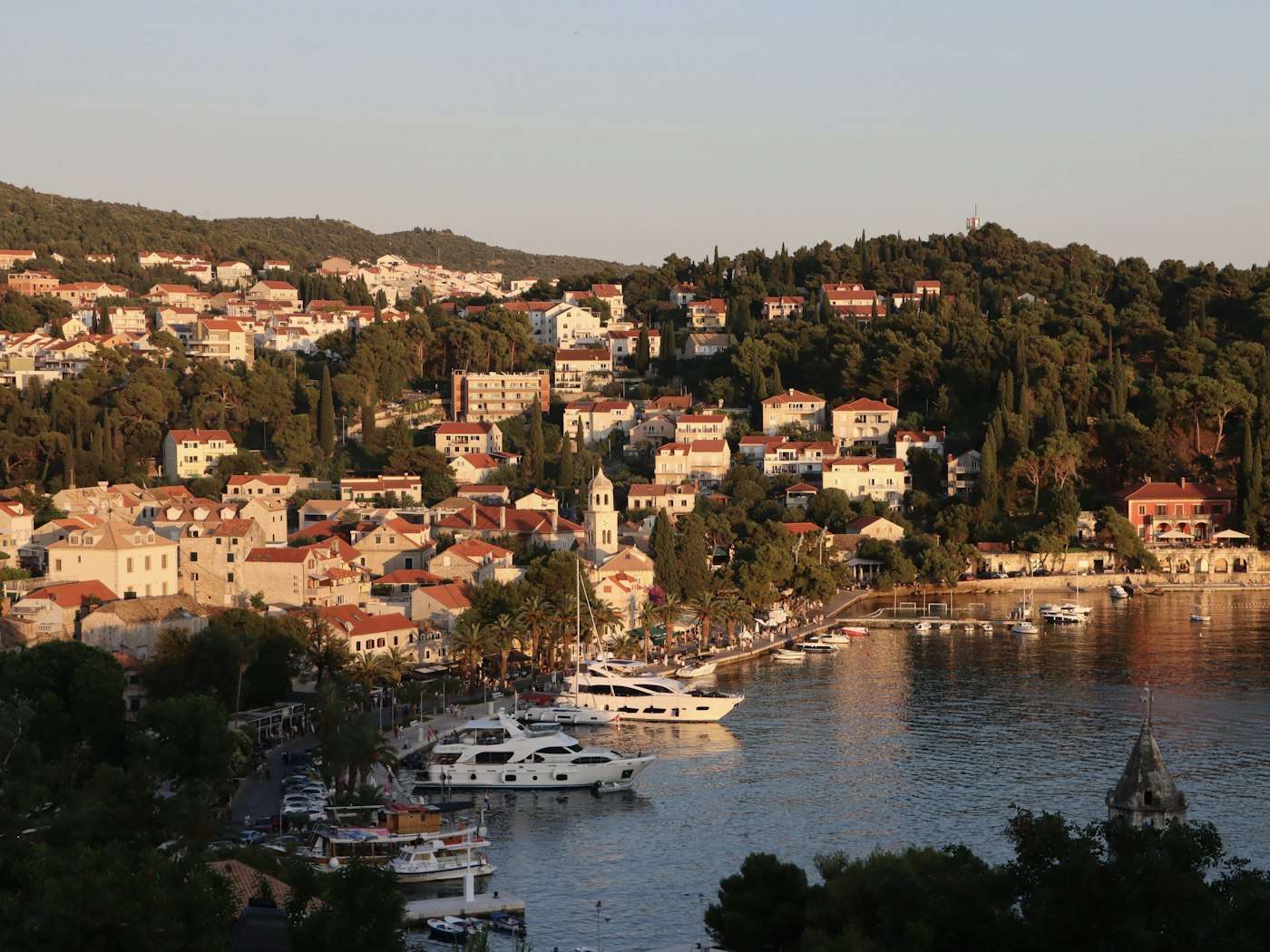
- The waterfront is the town: a palm-lined riva of cafés and moored yachts curving around a sheltered bay, with none of the old town’s crush.
- Ivan Meštrović built the Račić family mausoleum on the cemetery hill — white Brač stone, angels, and a dome, rated among the sculptor’s finest works. The climb is short and the view pays twice.
- Vlaho Bukovac, Croatia’s great painter, was born here; his family house keeps his studio and works. Town info at visit.cavtat-konavle.com.
- The path around the peninsula — pines, rock-slab swimming spots, seven easy kilometers around both headlands — is the best flat walk on this coast. Swim shoes help on the rocks.

Getting there
Bus 10 leaves Dubrovnik roughly every 30 minutes year-round and reaches Cavtat in 25 to 35 minutes for a few euros. From May to October, boats run from the Old Port — about 30 minutes on the water, around €8 each way, weather permitting — passing the city walls and the Konavle coast on the way. The airport sits ten minutes from Cavtat, which makes the town a natural first or last day of any Dubrovnik trip. Everything in town is walkable from the riva.
The day
Arrive by boat if the season allows, and let the waterfront set the pace: coffee on the riva, boats knocking gently, and the crowds you left in Dubrovnik conspicuously absent. Climb the cemetery hill first — the Račić Mausoleum, all white stone and quiet under its dome, is Meštrović working at full power on a small canvas, and the cypress-framed view over both bays is the town’s finest. Back down, the Bukovac House fills half an hour with the painter’s studio and canvases, and the Rector’s Palace museum covers Cavtat’s ancient past as Greek and Roman Epidaurum — the settlement whose refugees founded Dubrovnik itself. Lunch long on the water, then walk the peninsula path around Rat and Sustjepan: pines, coves, and flat rock slabs that double as swimming platforms all summer. Dinner on the riva costs noticeably less than anything inside Dubrovnik’s walls; the last bus makes it a real option.
When to go
May through October, when the boats run and the swimming path comes into its own — June and September are the balance points of warmth and room. July and August afternoons bring day-trippers and yachts, but Cavtat absorbs them far better than Dubrovnik. Winter shrinks the town to locals and bus-only access: peaceful, but half the restaurants sleep.
Frequently Asked Questions
How do you get from Dubrovnik to Cavtat?
Bus 10, every half hour or so, 25–35 minutes; or, from May to October, a boat from the Old Port in about 30 minutes for roughly €8. Boat out, bus back is the classic combination.
What is the Račić Mausoleum?
Ivan Meštrović’s 1921 mausoleum for the Račić family, in white Brač stone on Cavtat’s cemetery hill — widely counted among the great Croatian sculptor’s masterpieces. Small entry fee, short climb, superb view.
Is Cavtat good for swimming?
Yes — the peninsula path is lined with rock-slab platforms and small coves, and the bay itself stays calm. Swim shoes make the rocky entries comfortable. Beaches here are stone, not sand, as everywhere on this coast.
Why is Cavtat historically significant?
It began as Greek, then Roman Epidaurum; refugees from its 7th-century destruction founded Ragusa — Dubrovnik. The Rector’s Palace museum and scattered remains cover that ancestry.
Is Cavtat cheaper than Dubrovnik?
Noticeably. Waterfront dining, drinks, and accommodation all run well below old-town Dubrovnik prices, which is why many travelers base in Cavtat and day-trip the walls instead of the reverse.